
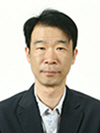
| Major (Research Area) : Koeran History in Politics Office : X 401 TEL : 02-705-7974 E-mail : hispolkim@sogang.ac.kr |
1. Biography |
- Education
B.A., M.A., and Ph.D. from Sogang University
Visiting Fellow, Harvard University Yenching Institute (1993–1994)
Faculty Member, Academy of East Asian Studies, Sungkyunkwan University (2000–2011)
Professor, Department of International Korean Studies, Sogang University (2012–present)
2. Research Activities |
• Comparative historical research on the modern transition processes of Korea, Europe, and other Asian countries
• Conceptual history research on the translation, reception, diffusion, and transformation of social science concepts in Asia
3. Interviews |
Q1. What led you to join the Department of International Korean Studies?
During my time as a visiting fellow at the Yenching Institute at Harvard University, I often encountered foreign scholars of Korean studies who were highly knowledgeable about Korea in academic terms, but lacked familiarity with Korea’s emotional context and everyday culture. I observed a persistent gap between the strong nationalist sentiment often found among Koreans and the resistance to it from foreign researchers. This led me to reflect on how to bridge that divide.
In the 2000s, while working at Sungkyunkwan University, I was in charge of recruiting international students as part of the university’s globalization strategy. Naturally, I began to take interest in the globalization of Korean studies and the potential for Korean issues to be discussed on a global stage. I wrote policy reports related to Korean studies and participated in advisory roles for government institutions such as the Korea Foundation and the Korean Studies Promotion Service. These activities deepened my academic interest in the field.
Eventually, I heard that Sogang University was establishing a new department called "International Korean Studies." As this directly aligned with my longstanding academic concerns, I decided to apply. I saw it as a chance to incorporate the academic and policy-oriented insights I had developed over the past decade into both education and research.
Q2. How do you define "International Korean Studies"?
I see International Korean Studies as a "space where Korean and foreign scholars of Korean studies meet." The term "international" is not just about the act of meeting, but about making meaningful communication possible. True international Korean studies must move beyond an ethnocentric viewpoint and approach Korea as a subject of universal human concern.
Various academic disciplines—politics, economics, society, culture, history, literature—must work together to connect Korea’s particularities with universal human themes. In this regard, it’s only natural that the department belongs to the School of Integrated Knowledge. Interdisciplinary methods allow for more persuasive education and research by approaching a single topic from multiple perspectives.
Ultimately, International Korean Studies must serve as a bridge between the “Korean” and the “global,” facilitating dialogue between the two. This is not only an academic concept but also a foundation for students’ career paths, allowing them to thrive in diverse fields.
Q3. What do you expect from students of the Department of International Korean
Studies?
First, students should develop the academic foundation necessary to enable communication between Korea and the world. Understanding Korea requires not only knowledge of the present but also a deep grasp of the past—its history. To move fluidly across spatial and temporal dimensions, students need a foundational education in sociology, political science, economics, culture, history, and literature.
While interdisciplinary studies encourage holistic thinking, students who lack a solid foundation may struggle to compete with scholars trained in specific disciplines. One of our department’s strengths is students’ language skills. However, without substantive content knowledge, language alone is not a competitive asset. In contrast, when students have a solid academic base, their bilingual abilities become a major strength. Students majoring in International Korean Studies must read widely and deeply, both domestic and international works, and strive to establish a scholarly identity in a specific field.
Second, students should adopt an open and proactive attitude. Although Korean studies is a recognized discipline abroad, it is not yet fully institutionalized within Korea. Our department is pioneering a new model, and our students must become the first examples and role models.
This calls for collaboration with international students, exchange with domestic peers, and active participation in various projects and activities. Beyond academics, students must be willing to grow through practice and experience. I hope they embrace a sense of community—learning together, sharing each other’s strengths, and creating new paths as pioneers.